THE FILMRADIO DRAMASHEETSSOUNDDIALOGUECREDITSK_BROJKAV9 DRAFTARHv335

scene 19 -> shot 19.6 -> key frame

Shot 19.6  Viveka's room

This is where you ask for things. Tick a key frame for a breakdown into background and foreground, or for a change, say what needs to change, and press the button at the bottom. Marko gets an email.

2 key frames in this shot. The one marked represents the shot on the scene page.

SC6-2.pngaccepted

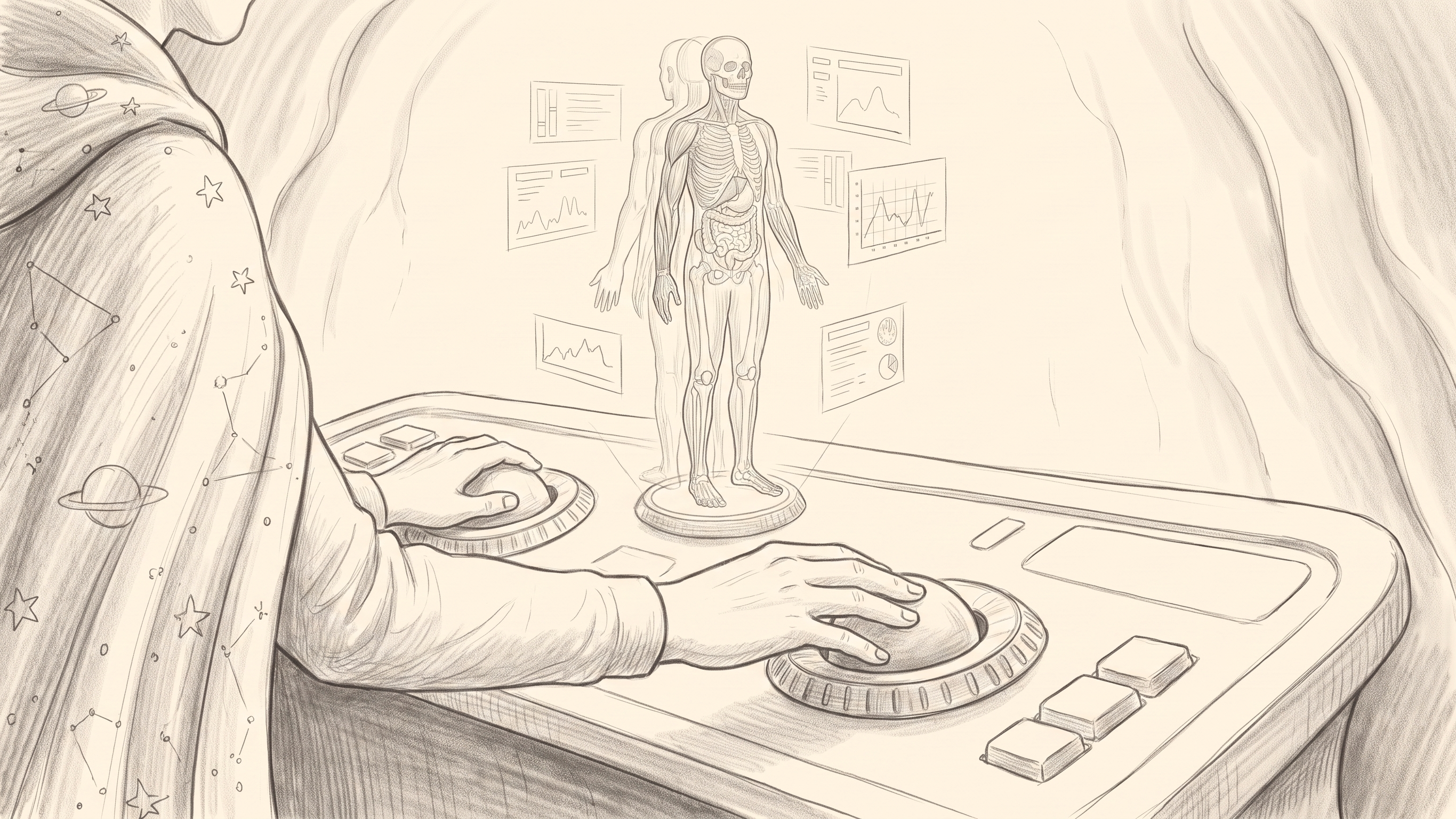
CLOSE ON THE CONSOLE, and this is the frame the room was built from. His hands rest on two of the three trackballs, the cloak falls across the edge of the picture with its stars and ringed planets, and the hologram of the body stands in the air above the panel: skeleton, muscle and organs hanging slightly apart from one another, thin readouts floating free at different depths. Everything is made of light and nothing is framed. THE PANEL IS BIG AND ALMOST EMPTY, which says he is in command far better than a wall of switches ever did. THE BRIDGE BETWEEN THE ARM AND THE BOARD. Without it he goes from having his arm moved for him straight into reciting a physiologist and a date, and the lecture arrives from nowhere. So VIVEKA ASKS, and the recitation becomes an answer rather than a performance. And the last line is the whole method of the scene: I want to hear you say it out loud, that is usually enough. Viveka never tells him he is wrong. He gets the boy to lay his own theory out until the boy can see the hole in it.

SC6-BOARD-02-VIVEKA.pngrepresents the shotaccepted

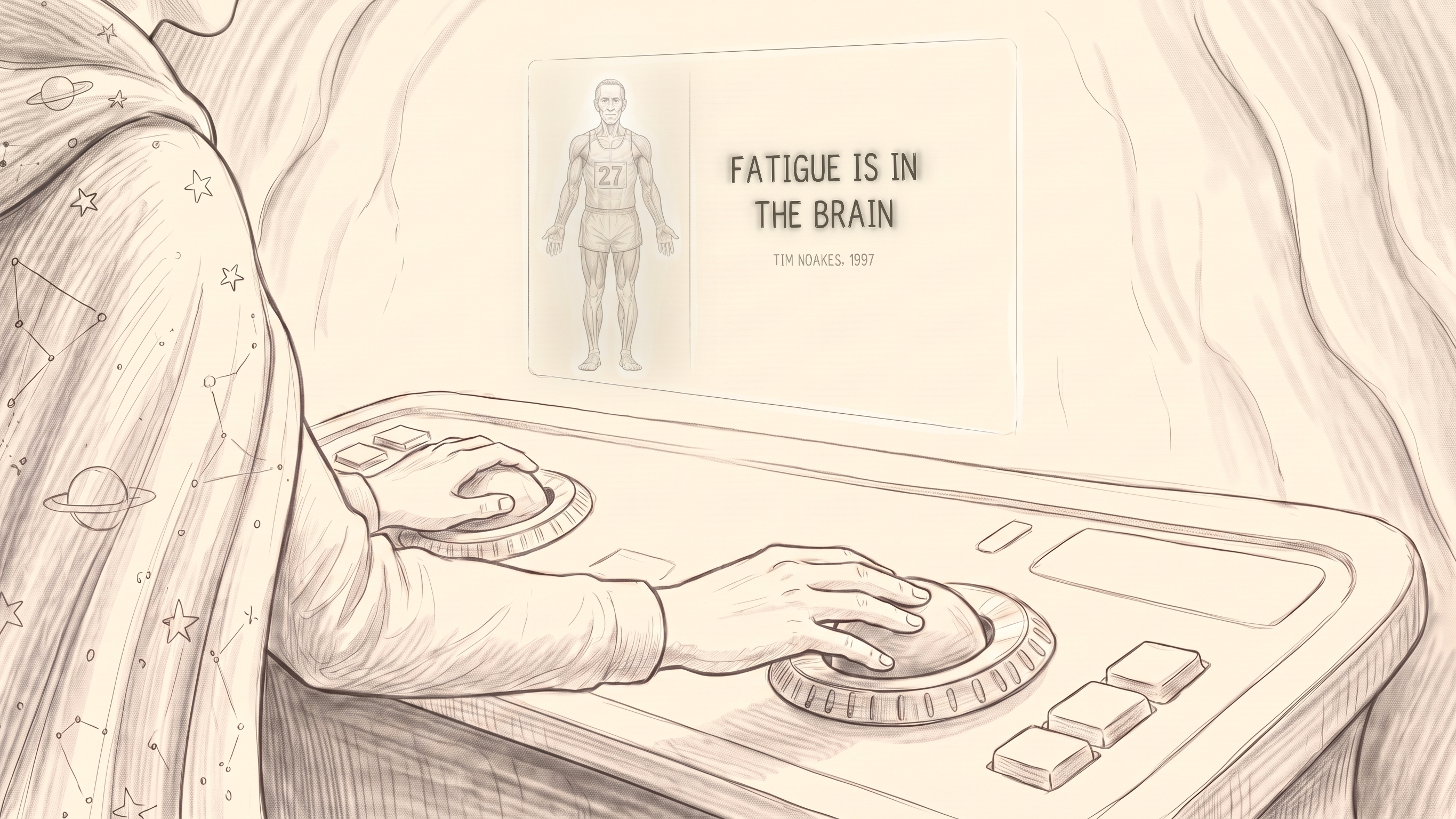
ONE DISPLAY, THIRTEEN STATES. Manan puts a claim on it, Viveka overwrites it, back and forth, until the right theory is standing there alone. All thirteen are identical except the words and the light, so THE ANIMATION IS A CROP between frames. EVERY CLAIM CARRIES ITS NAME AND ITS YEAR, in small type under the line, the way a lecture slide does. A jury of scientists reads a claim without attribution as an opinion. THE BOARD IS FORMAL AND THE BOY IS NOT: he gives the name and the year, then says what it means in his own words. THE TURN IS AT STATE NINE AND IT IS THE BEST THING IN THE SCENE. Hill proposed the muscle model in 1923 and then, in 1924, proposed a central governor protecting the heart. He had reasoning and no evidence, so it was dismissed, and the field spent seventy years on the muscle. Noakes revived it in 1997; Noakes, St Clair Gibson and Lambert published it as a full theory in five linked papers in 2004. IT IS NOT A BOY CORRECTING A DEAD SCIENTIST. It is a boy discovering the man was right and had been forgotten. THE HIGHLIGHT MOVES, THE FIGURE DOES NOT: the LEG when Manan speaks, the HEAD when Viveka answers, and the head from state nine onward because from there they are agreeing. Both hands stay on the trackballs and the key is never shown in this stretch. THE WORDS ARE PINNED TO THE SCREEN AND CENTRED IN THEIR OWN REGION. The panel is two spaces: the figure on the left, and a roughly square writing area on the right. The line and its attribution are ONE BLOCK, measured together and centred in that area horizontally and vertically, clear of the divider, then mapped onto the panel plane so they tilt with the glass. THE FIGURE ON THE DISPLAY IS THE RUNNER HIMSELF, not a generic body: his face, his build, the sleeveless vest with the number 27, his shorts. THE SKIN AND THE KIT ARE HALF TRANSPARENT AND THE MUSCLE RUNS UNDERNEATH, and the 27 stays readable on top of it. An X-ray that shows MUSCLE: no skeleton, no ribcage, no organs. That matters for the argument. They are not discussing a body, they are discussing THAT body, the one we watched collapse in the first scene, and the audience can see it is the same man.

← back to scene 19

THE BRAIN BRAKE
The Central Governor Theory  ·  Breakthrough Junior Challenge 2026